
Mountaineering cost in India
Mountaineering is often spoken about as an adventurous escape or a once-in-a-lifetime experience. What is rarely discussed is what it actually costs to get there. Not just financially, but in preparation, time, and the many small expenses that quietly add up along the way.
In India, mountaineering is frequently misunderstood. Many people assume it is similar to trekking, or believe that it can be done cheaply with minimal planning. This gap between perception and reality is where most beginners struggle, and sometimes fail before they even begin.
This article is written for those who are genuinely curious about mountaineering and want a clear, honest picture before committing. It is based on first-hand experience and real preparation, not internet summaries or second-hand advice.
If you are considering your first mountaineering course, a basic climb, or simply trying to understand what goes into becoming mountaineering-ready in India, this breakdown will help you plan better and avoid unpleasant surprises later.
The goal here is clarity. When you understand the real cost, you make better decisions.
What Do People Mean by Mountaineering in India?
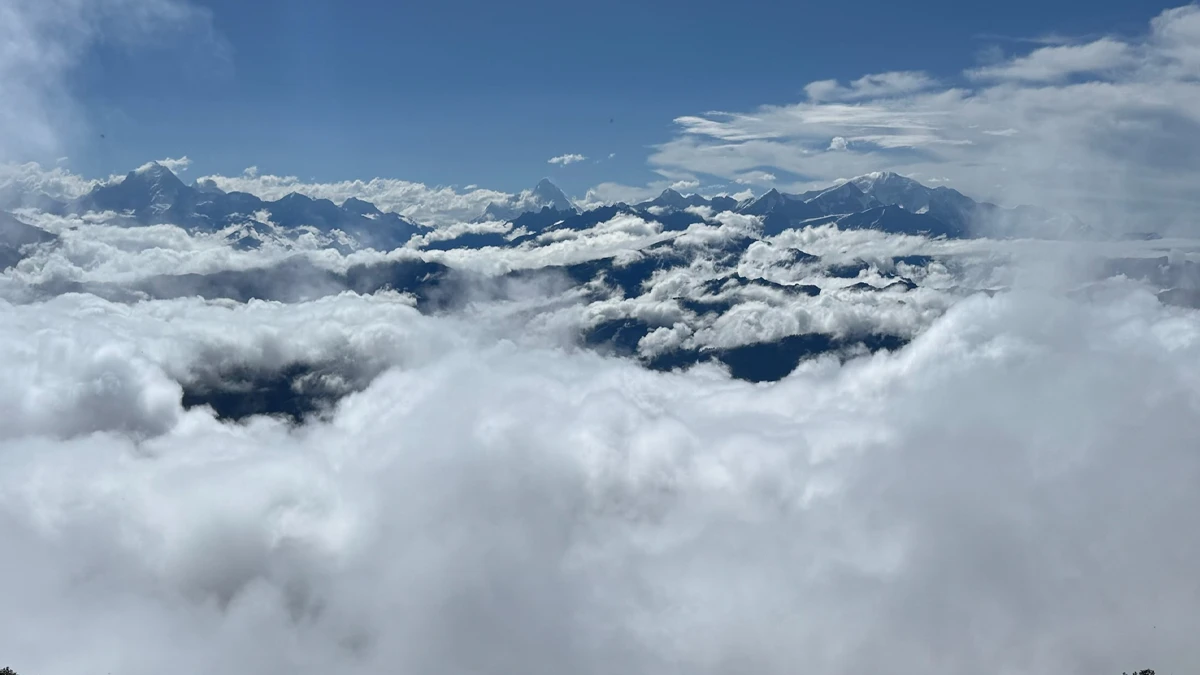
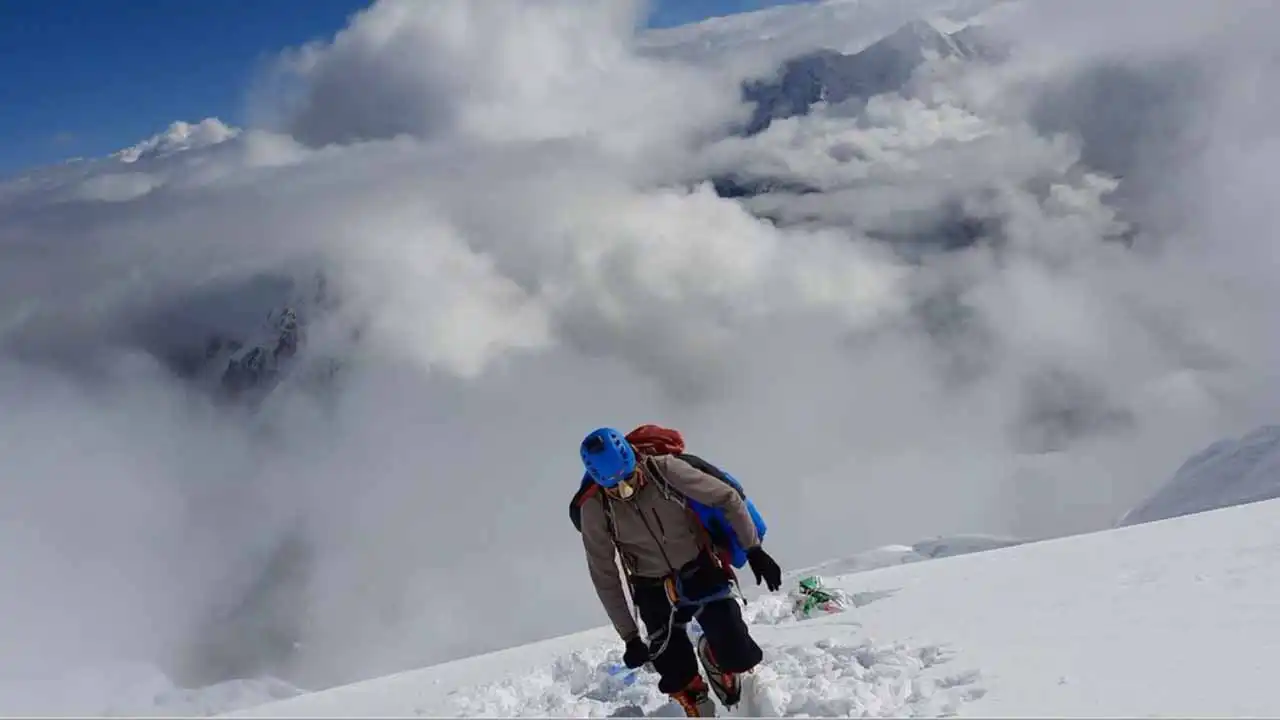
Photo Courtesy - Venky
In India, mountaineering has long been a misunderstood activity. In a country with a vast population, strong rural roots, and relatively limited exposure to outdoor culture, going to the mountains was, for a long time, seen mainly as a holiday rather than a serious pursuit. Until fairly recently, especially before around 2010, the idea of climbing mountains rarely went beyond sightseeing, trekking, or tourism.
My own exposure to the mountains came late. In 2011, I visited the Greater Himalayas in Nepal for the first time, not as a climber, but as a typical tourist. I remember complaining about comfort, food, and fatigue, completely unaware of what those mountains truly represented. Standing in Nagarkot near Kathmandu, looking at the Himalayan range, I was still ignorant of what mountaineering actually meant. At that point, I genuinely believed it was not for me. And at that point I was neither physically strong nor mentally capable of climbing mountains.
Today, having lived and functioned in the death zone, I can clearly see how limited that understanding was.
Like many others, I also believed trekking and mountaineering were essentially the same. They are not. This confusion comes from several factors, including lack of exposure, borrowed narratives, and the way outdoor gear is marketed. Many people assume that trekking equipment is sufficient for climbing, or that the gear available for casual hikes is also meant for technical ascents. Often, this misunderstanding becomes clear only after people spend significant money on equipment they do not actually need for a trek, or worse, attempt climbs without the right preparation.
Trekking largely relies on cardiovascular fitness, endurance, and basic movement. Mountaineering, on the other hand, is an entirely different discipline. It demands full-body strength, technical knowledge, ice and rock craft, rope systems, self-arrest skills, and the ability to function safely in complex and hostile environments typical of mountaineering in the Himalayas. It is not just about walking uphill. It is about decision-making, precision, and survival.
Becoming a mountaineer does not happen by buying expensive gear or registering for a trek in the Himalayas. It comes from months of disciplined training, repeated practice, physical conditioning, and a gradual mental shift. Over time, one begins to build a deeper relationship with the mountains, something that goes beyond fitness or equipment and enters a space of respect, awareness, and humility.
Understanding this distinction is the first step toward understanding why mountaineering costs what it does.
Training Costs Before Your First Climb

Before I understood what mountaineering truly involved, I spent years moving through the mountains without real direction. Like many beginners, my early exposure came through trekking, often driven by friends or circumstance rather than informed choice. The first time I walked on snow was during a crowded group trek, to an altitude that did not even cross fourteen thousand feet.
A year later, I trekked to Sandakphu in West Bengal and saw Kanchenjunga up close for the first time. Something shifted there, although I still lacked clarity. That clarity came much later during my volunteering work in Nepal after the 2015 earthquake, when a friend explained to me the fundamental difference between hills and mountains. By then, I had already spent more than three lakh rupees across multiple trips without gaining any real mountaineering skill. What I had accumulated was ego and misplaced confidence.
My first real exposure to mountaineering came when I attempted Deo Tibba, completely unprepared. The attempt failed decisively. That failure was uncomfortable, but necessary. It forced me to accept that enthusiasm and fitness were not substitutes for training.
Only after that did I apply for a Basic Mountaineering Course. I secured admission in 2018 and completed the course. I struggled there as well, but this time the struggle came with learning. I gained the foundational skills required to move on glaciers, negotiate crevasses, understand rope systems, and function safely in technical terrain. More importantly, I learned what it actually means to be trained.
Training is expensive when approached blindly. It becomes far more costly when people spend years drifting through small treks, repeating mistakes, and buying unnecessary gear. For anyone serious about mountaineering, formal training is not optional. A basic and advanced mountaineering course is not an extra expense. It is the starting point.
Gear Costs and Why Beginners Get This Wrong
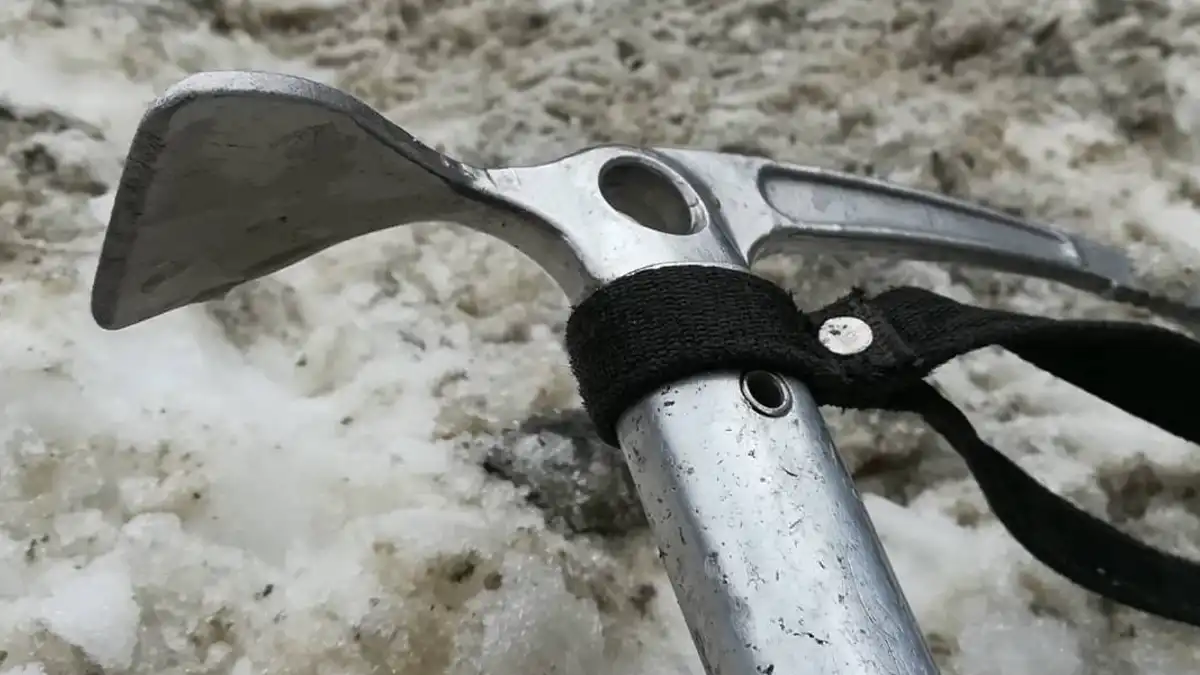
Most beginners are confused about money when it comes to mountaineering gear. There is always insecurity around cost, and very often people make the mistake of compromising on quality to save money. This is a serious error. Mountaineering is not a casual activity. Every situation and every decision carries consequences, and a single mistake can end everything very quickly.
The problem is that most people try to buy gear before they understand what it is meant for. Real clarity about equipment usually comes only after formal training at a mountaineering institute. A Basic Mountaineering Course plays a crucial role here. It teaches not just how to use equipment, but why certain tools exist and when they are actually required.
For beginners, it is also important to understand that gear does not need to be purchased all at once. Some items can be accumulated gradually over time. Quality equipment lasts for years, sometimes more than a decade, if used and maintained properly. This makes research and patience far more important than impulse buying.
At a basic level, essential gear includes a harness, carabiners, slings, an ice axe, a descender, proper boots, technical clothing, and a climbing rope. Lightweight equipment is generally preferable, but weight should never come at the cost of safety. Some compromises can be made on items like carabiners or ice axes during early training, but there should be no compromise on the climbing rope. A certified kernmantle rope, usually between eight and ten millimeters, is non-negotiable even for practice.
In India, access to high-quality mountaineering gear is limited, although improving. Nepal, especially areas like Thamel, offers a much wider range of equipment across price points. Regardless of where it is purchased, the cost of a basic gear setup can easily reach around one lakh rupees. As climbing becomes more technical and objectives more serious, this cost increases significantly depending on terrain, conditions, and equipment requirements.
Any critical safety equipment must meet international certification standards such as UIAA or CE. This is not an area where shortcuts are acceptable, regardless of experience level or cost considerations. During formal training, some equipment can be rented, which helps reduce the initial investment and prevents unnecessary purchases. This approach allows beginners to understand what they truly need before committing to long-term gear decisions.
Training Institutes in India
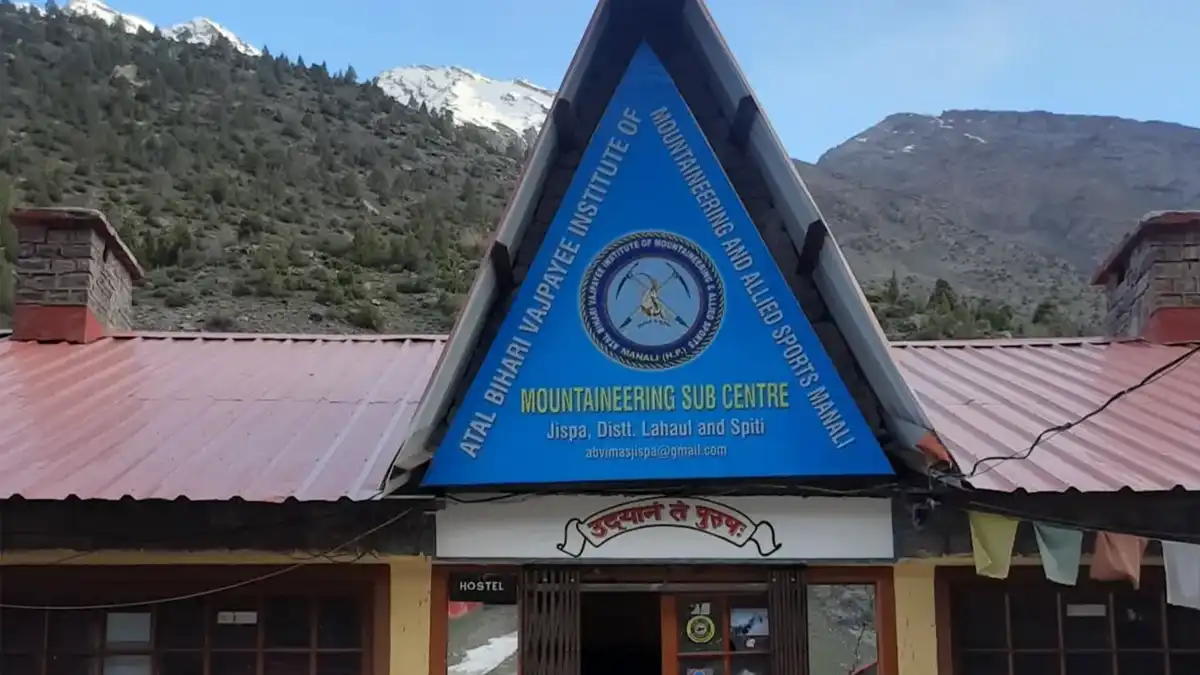
Mountaineering institutes in India were established decades ago, long before mountaineering became widely visible to the general public. Their original purpose was not recreational adventure, but structured training for local communities to build careers as mountaineering guides, trekking guides, and instructors. Over time, these institutes also opened limited seats to students from across the country and abroad.
In India, professional credibility in mountaineering and trekking is closely tied to formal certification. Licenses for trekking guides and mountaineering guides are linked to qualifications such as the Basic Mountaineering Course (BMC), Advanced Mountaineering Course (AMC), and further instructor-level training. This system is how many local professionals eventually establish trekking and climbing companies.
There are five government-established mountaineering institutes in India:
- Jawahar Institute of Mountaineering(JIM), Pahalgam, Jammu & Kashmir
- Atal Bihari Vajpayee Institute of Mountaineering and Allied Sports (ABVIMAS), Manali, Himachal Pradesh
- Nehru Institute of Mountaineering (NIM), Uttarkashi, Uttarkhand
- Himalayan Mountaineering Institute (HMI), Darjeeling, West Bengal
- National Institute of Mountaineering and Adventure Sports (NIMAS), Dirang, Arunachal Pradesh
These institutes provide structured and internationally respected training programs. Courses include BMC, AMC, Method of Instruction (MOI), and specialized modules related to mountaineering and allied disciplines. Applicants must apply through the respective institute websites, as selection criteria and schedules vary.
Each core course typically runs for around 28 days. Completion of BMC is mandatory to qualify for AMC, and AMC is required before progressing to instructor-level training. Beyond these, climbers can pursue specialized courses such as crevasse rescue and avalanche rescue, which are essential for higher-risk environments.
In addition to government institutes, several private and state-level organizations conduct short courses focused on rock climbing, trekking fitness, and basic outdoor skills. While these can be useful for exposure and conditioning, they do not replace the structured training provided by recognized mountaineering institutes.
Permits, Guides, and Local Fees
In India, the Indian Mountaineering Foundation (IMF) acts as the primary governing body for mountaineering activities, particularly for high-altitude expeditions. Permits for major climbs are issued through the IMF, and compliance with its regulations is mandatory for recognized expeditions.
In most cases, registered climbing companies or licensed guides handle permit-related procedures as part of an expedition package. Independent climbers must coordinate permits not only through the IMF but also with local administrative bodies, forest departments, and district authorities depending on the region.
Independent expeditions are still relatively uncommon in India. Most climbs are conducted in collaboration with registered operators due to the complexity of logistics, permits, and local regulations. Anyone planning an individual expedition must contact the IMF well in advance to understand documentation requirements, timelines, and regional rules.
Permit fees, liaison charges, and local administrative costs vary by mountain and region. While these expenses may not always appear prominently during planning, they form a necessary part of legitimate and compliant climbing in India.
Travel and Logistical Expenses
Even after training and gear are accounted for, mountaineering continues to incur costs that are rarely planned for in advance. These expenses do not come from the climb itself, but from everything surrounding it. This is where many beginners underestimate what mountaineering actually demands.
Reaching mountain regions is rarely straightforward. Training institutes, base villages, and climbing areas are often far from major transport hubs. The cost is not just the journey from a city to the mountains, but the multiple transitions that follow. Each change in location introduces uncertainty, dependency on local transport, and expenses that are difficult to predict beforehand.
Accommodation and food outside structured programs are another overlooked factor. Reporting early, delayed departures, weather disruptions, or recovery days after descent all require additional stays. These are not luxuries. They are practical necessities imposed by terrain, altitude, and conditions beyond personal control.
Time itself becomes a logistical cost. Weather does not follow schedules, and mountains do not operate on fixed timelines. Buffer days are not optional; they are essential. Without accounting for delays, missed connections, or extended acclimatization, budgets often collapse quietly rather than dramatically.
Travel and logistics rarely feel expensive in isolation. But over time, they accumulate and often rival more visible costs. Understanding this aspect early helps avoid frustration and allows for realistic planning, which is as critical to mountaineering as physical preparation.
Hidden Costs Nobody Talks About
Hidden costs are often small in isolation, but they accumulate quickly. These include insurance, local transport, last-minute purchases, and essentials that are easy to overlook during planning.
Simple items such as sleeping bag liners, water bottles, medical supplies, sunscreen, or personal medication often need to be purchased close to the expedition. Transport costs such as taxis, shared jeeps, local buses, and short-distance travel between transit points add up quietly.
These expenses rarely appear in course fees or expedition brochures, yet they are unavoidable. Whether trekking or mountaineering, such costs are part of operating responsibly in remote environments. Ignoring them leads to budget stress later, not savings.
Is Mountaineering Worth the Cost?
Yes, but not for everyone.
Mountaineering demands time, patience, and a willingness to accept risk and uncertainty. It is not a shortcut to achievement, nor a guaranteed path to progress. Training takes years, not months. Experience accumulates slowly, often through failure rather than success.
For those who approach it seriously, mountaineering offers something rare, long-term growth rooted in discipline, decision-making, and responsibility. The cost is not only financial. It includes time away from comfort, repeated learning cycles, and acceptance of limits.
For people seeking quick outcomes or validation, mountaineering will feel expensive. For those drawn to exploration and process, the cost becomes part of the commitment.

Conclusion
Mountaineering is not expensive because the mountains are difficult. It becomes expensive when preparation is incomplete and expectations are unclear. Most costs are not hidden; they are simply misunderstood or ignored early on.
Training, gear, logistics, and time all demand commitment. When approached gradually and deliberately, these costs become manageable. When approached impulsively, they multiply quickly and often lead to frustration rather than progress.
This article is not meant to discourage anyone. It is meant to replace assumptions with clarity. Mountaineering rewards patience, planning, and responsibility far more than enthusiasm alone.
Understanding the real cost does not make the journey easier. It makes it honest.
And honesty is the most reliable place to begin.
Best,
Venky