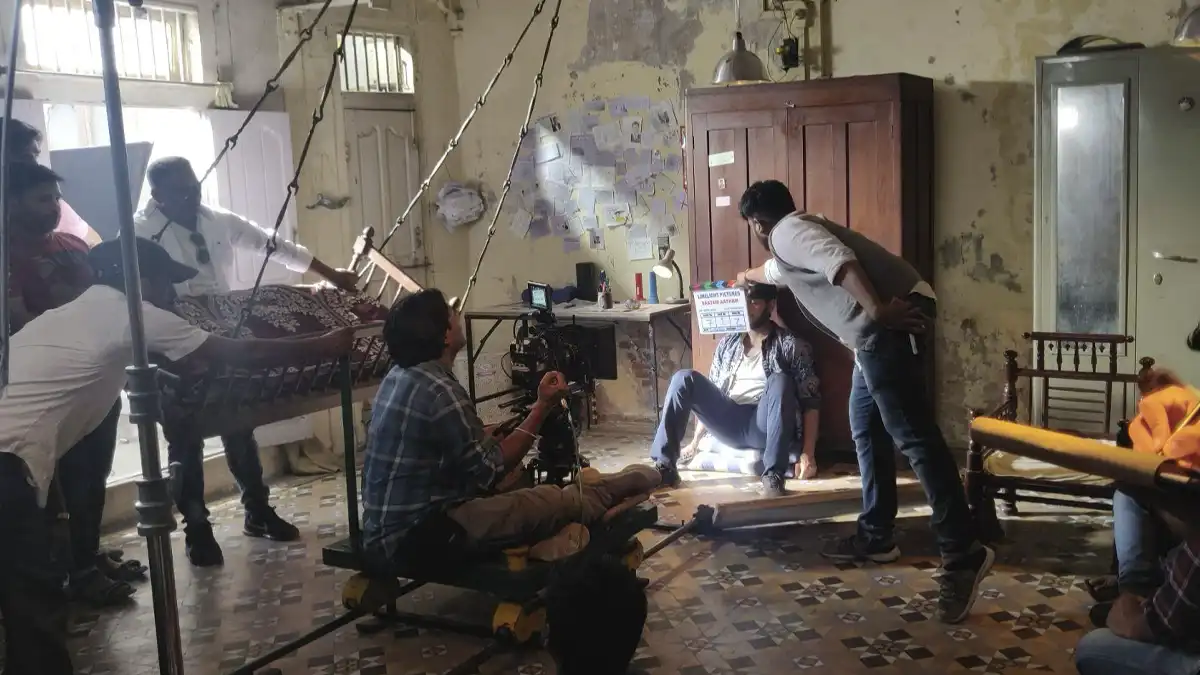

As far as I remember I always wanted to work in the movie sets. The process of filmmaking was so inspiring for me as I kind of manifested the whole thing. In my 8th class I was the part of one documentary for DD National where I had to play the role of the grandson. That was to be directed by my uncle so he approached me and I said yes to that project so that became my first ever exposure to the filmmaking process. At that point of time I decided that I will do this for the rest of my life. Cut to 2019, when I met some amazing people in my filmmaking batch. We completed the course and then we got the call from the same production house that they were looking for the assistant director for their upcoming Gujarati Feature Film called Saatam Aatham.
The Pre-Production Process.
The first step about the Pre-Production was the Table Reading of the film script where the core team and the actors sat together to read the entire screenplay of the film. I understood the entire point of the table read when I actually experienced it. Each and every line, pauses, dialogues and, the motive behind the actions of the characters were discussed very deeply. There was not much we had to do as assistant directors in that meeting but we could observe as much as we could. In that particular session, I had the opportunity to think from the actor’s lens. The idea of the table reading of the script was much different before. After that, the Pre Production actually got kickstarted. In the Pre-production process I had come across many important tools like Master-Breakdown, Scheduling, Props arrangement, Costume arrangement and, the technicalities of the clapboard. My core role in the film was to give the clap when the camera starts rolling. I asked my chief assistant director about the importance of this tool. He said that this is not a small task and never thinks of this work as a baseless task because it is as important as any other job-role in the film-set. He made me understand how it can be essential for the editor. I was also involved in the process of the breaking-down the whole script scene by scene. In that process one has to sort out the locations, costumes, props, and other technicalities. Based on that process the scheduling was done. There was not much task for me during this period but there was so much to process about so many things. The pre-production got completed and then we started the shooting for the film and that went for 18 long days.
Production
The shooting process was total chaos in the purest sense. On the surface level one can say that this is an easy task but if you dive deeper its more than that. There was a great amount of adrenaline rush in each and every day. The first day of the shoot was a nightmare for me. There were certain things in my job role which I was not told to follow on the shooting day. For example, I had to give the mark to the actors who were there in the shot in order to get the focus at the right point. What I really find funny from that day is that the person from the art department whom we called setting Dada (The guy who sets the props and maintains the set while the scene is being shot) explained to me the various differences of the lens and the technicalities of giving claps on the different lenses.
The following days were very difficult for me at-least because I got confused at some places about my job-role. There were some scenes in which I was told not to clap because the scenes were having the action sequences. In some of the scenes, I was scolded by the camera team because the space was too small to stand for 3 to 4 people. In one of the sequences, I chose not to give the clap out of fear because I was scolded by the Director of Photography and his team as they were thinking that I was kind of interfering with their space but actually I was just doing my work. The Director came to know after the second take that I haven’t given the clap so she shouted in front of the entire crew what the hell i was thinking at that point of time. I felt humiliated and ashamed but these are the things that taught me about the certain responsibility that I should stand for my work no matter what the other members of the crew tells me what to do and what not to do. I learnt another lesson that day that I have to speak up about the wrongdoings and I have to make some bold moves when the time comes.
I must say working in a film is not an easy thing especially when you are working in a budget constraint. There are some points which I do not like, for example unnecessary shouting at the people who do not have proper position. I find it very disturbing when HODs misbehave with the crew members. There are countless incidents where I got to observe that people abuse their power and play mind-games. That is where I decided that I will not discriminate against anyone irrespective of their position because we really don’t know where they come from. I noticed that each and every crew member works really really hard to make a good film. They all play an essential role including lightman to director to assistant director to actors then why we should play politics and mind-games and abuse the power. One really can keep the system very easy-going as by end of the day it is a collaborative process. Things that are technical in nature take hardly a few days to learn but I believe small things like working in a proper code of conduct can make a huge difference in the process of filmmaking. Yes, I agree that there is a bigger budget involved and the moment a day starts your meter of money starts rolling but that does not give anyone the right to misbehave with anyone.
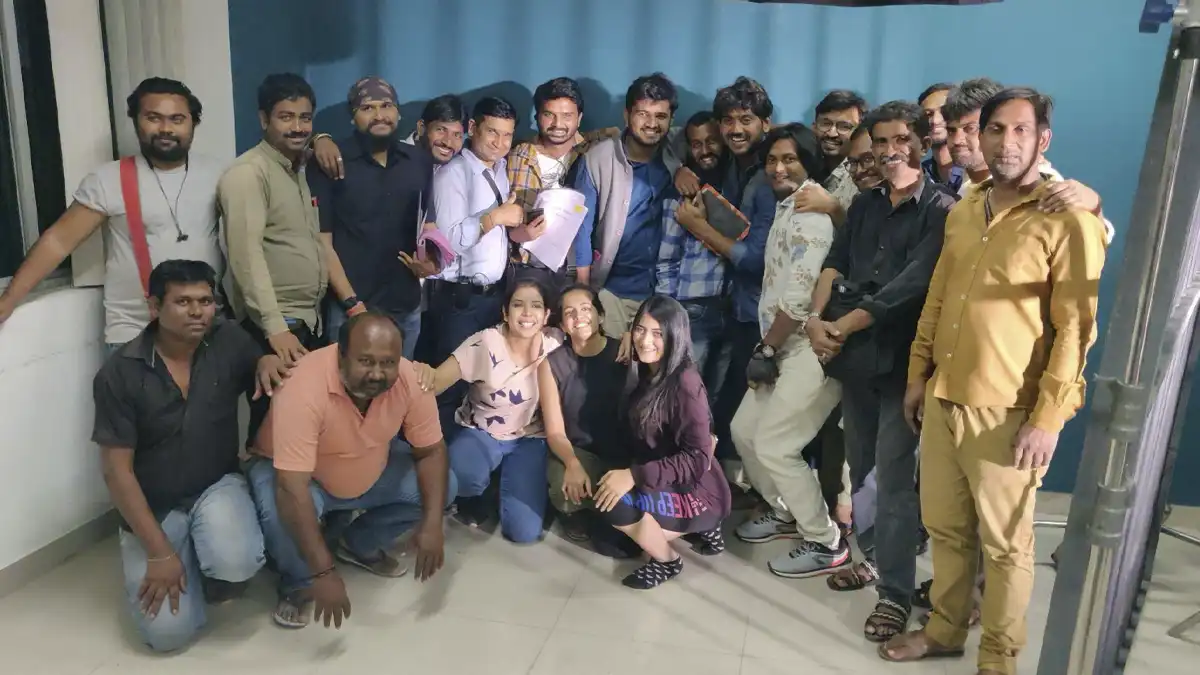
Apart from all these observations I believe Saatam Aatham shaped me as a person and I am grateful that I got the opportunity where I wake up everyday and do something creative. We did almost 14-15 hours daily for 17 days straight but those 17 days felt like 17 hours. There was a sense of satisfaction each and every day when I got back to my home. I learnt blocking the scenes, staging them, co-ordination with the crew-members, technicalities of the action sequences and above all of those things I got to work in the film for the first time which contained my favourite genre, Crime Thriller. I count myself very lucky and grateful that I got the job of a clapper so that I worked and co-ordinated with the actors very closely. I observed the process which an actor goes through everyday in every scene. I believe every single shot holds a learning if one really wants to go ahead in the process of filmmaking.
See you at the movies.