
Before every expedition, the same three things are discussed again and again.
Not mistakes.
Not incompetence.
Not poor planning.
Weather.
Timing.
Judgment.
Everyone agrees on them. Everyone nods. The principles feel settled, almost obvious. They are repeated in briefings, in tents, over tea. They sound solid at lower altitude.
And yet, as camps move higher and the summit comes closer, those same principles begin to lose their weight. Not suddenly.
Not dramatically.
Quietly.
This is where good decisions begin to break.
When Passion Starts Sounding Like Logic
Summit fever is often misunderstood. It is not recklessness in the obvious sense. It is not loud ego or blind ambition.
It is subtler than that.
At altitude, passion starts sounding like logic. Decisions feel reasonable. Each step forward feels earned. The mind begins justifying progress instead of questioning it.
What would have sounded like a warning at Base Camp now sounds like momentum. You do not feel as if you are ignoring principles. You feel as if you are interpreting them more intelligently.
Nothing feels reckless.
Everything feels considered.
That is the danger.
Weather Is Usually the First Compromise
Weather forecasts in the mountains are never perfect. In big ranges like the Himalayas, uncertainty is part of the system. Every climber knows this.
But closer to the summit, uncertainty stops being a reason to wait and becomes a reason to move.
The forecast is not bad.
It is just not ideal.
The wind is not dangerous.
It feels manageable.
The clouds are not closing in.
They appear to be moving fast.
The decision changes character.Waiting starts to feel like weakness. Turning back feels premature. Moving forward begins to feel responsible.
The weather has not changed.
Only the interpretation has.
The Illusion of Control
One of the most dangerous beliefs at altitude is the idea that experience guarantees clarity.
It does not.
Experience can do the opposite. Familiarity increases confidence, and confidence reduces friction inside the mind. Doubt fades faster. Alternatives receive less attention.
At altitude, the brain does not stop working. It narrows. It commits. It fixates.
And commitment feels like strength.
A Decision Not Taken
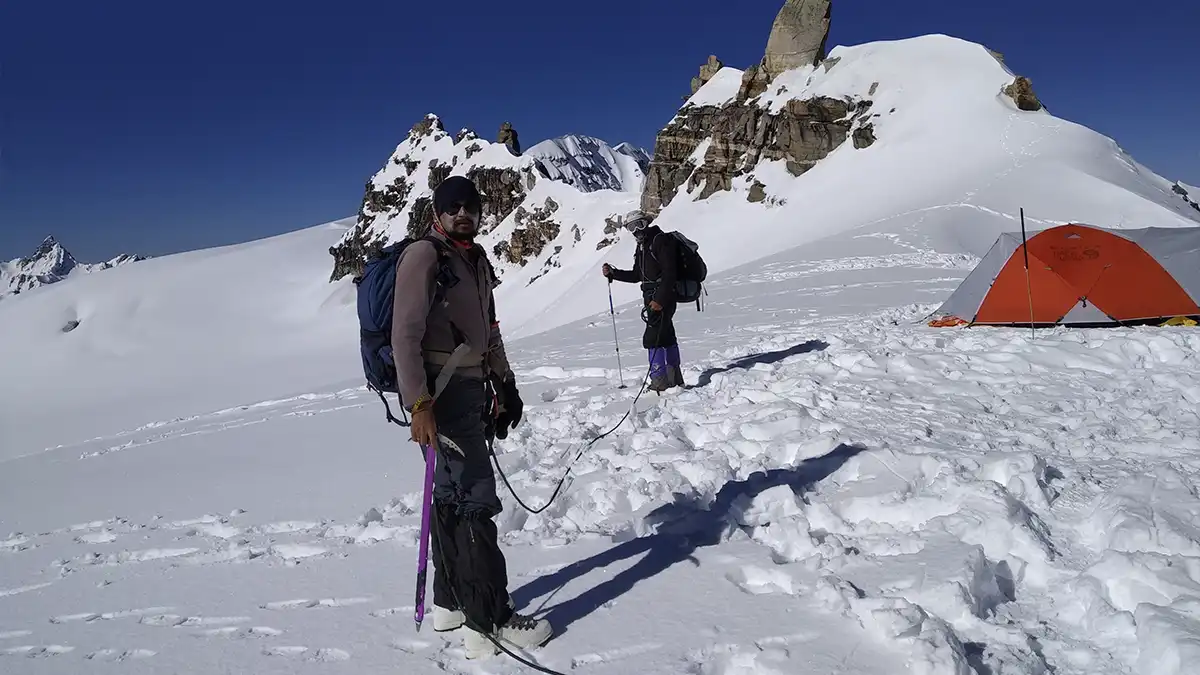
I have stood in that place myself.
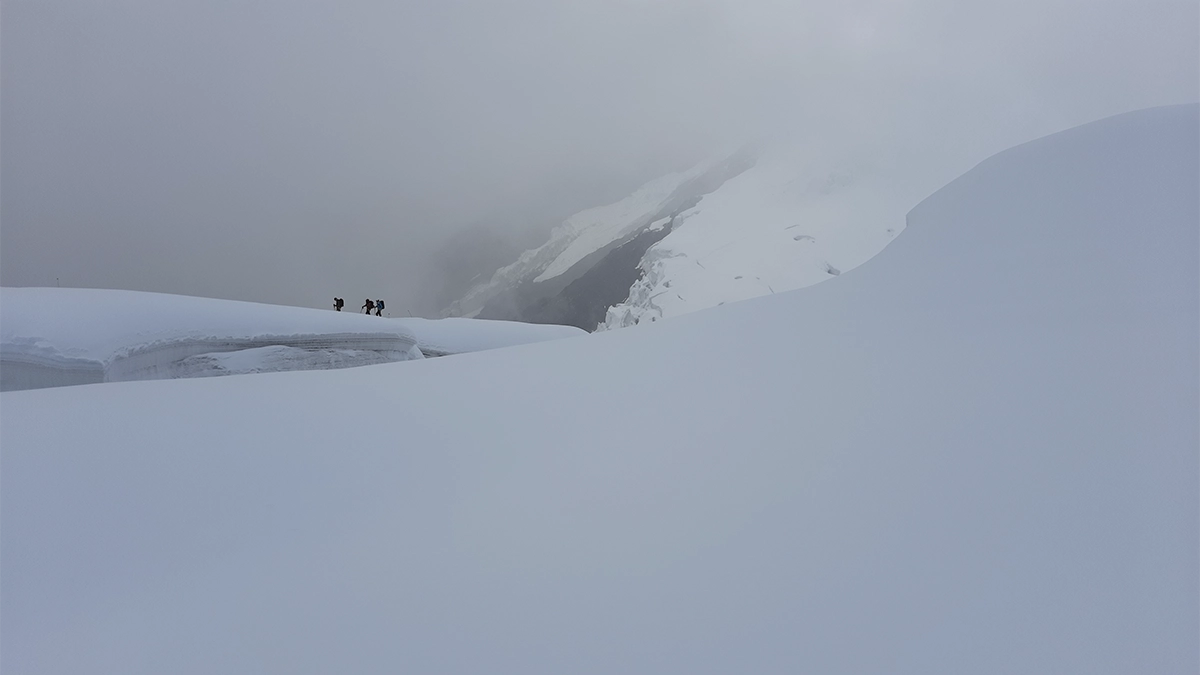
Bad weather was already present. Snow was turning into slush.
Sections ahead required knee deep movement all the way to the col.
The signs were not hidden.
Our team decided to abandon the summit attempt and return to Base Camp.
The decision did not feel heroic. It did not feel wise. It felt unfinished.
An English team had gone ahead of us a day earlier. They were caught in a massive avalanche and carried nearly two hundred meters down. Everyone survived. Barely. We witnessed what was left behind.
That was my second attempt on that mountain. We went home without a summit.
The mountain did not reward us.
But it did not punish us either.
Why Most Failures Do Not Feel Like Failures
The hardest truth about decision making at altitude is this.
Bad decisions rarely announce themselves as bad.
They feel calm. Rational. Even confident.
Fatigue does not always bring panic. Sometimes it brings emotional flatness. Fear dulls. Urgency replaces reflection. The mind stops asking whether something is wise and starts asking whether it is still possible.
Because the answer often feels like yes, the decision feels safe.
Passion overtakes principle not loudly, but politely.
How Judgment Quietly Degrades
Most failed climbs and unfinished attempts are not caused by one reckless choice.
They are built from a chain of reasonable decisions.
Each one slightly compromised.
Each one made by a mind operating under cold, exhaustion, time pressure, the weight of financial investment, and reduced oxygen.
At altitude, judgment does not disappear. It degrades.
And the most dangerous moment is when degraded judgment still feels trustworthy.
Closing
Good decisions do not break at altitude because climbers stop caring.
They break because the mind itself is operating under constraint.
Cold. Fatigue.
Accumulated effort.
Reduced clarity.
At altitude, the real risk is not making bad decisions.
It is believing that decision making is still intact.