

Introduction
You don’t have to be an activist or an academic to feel it. The world is (to put it mildly)…fragile.
A war in one region spikes fuel prices where you live. A diplomatic standoff rattles markets. Displays of nuclear weapons during parades, conflict or bomb threats headlines splashed across your screen, and suddenly the future feels a little less certain than it should. Even if you have never opened a textbook on International Relations, global politics already shapes your life; your job, whether your taxes increase, your safety, prices of groceries and the future of your children.
So this no longer remains as a theoretical debate. It becomes personal. And it leads to a simple, practical question-
“If the current models of power were truly efficient, would the world be this unstable?”
The System We Inherited and Its Limits
For decades, International Relations has largely followed the logic of realism. Thinkers like Hans Morgenthau and Kenneth Waltz argue that the world is competitive and dangerous, therefore states must rely on military strength and deterrence to survive.
This is of course, not a bad argument, and policymakers who follow it would argue its relative pragmatism. But realism has also normalized something troubling: the idea that peace comes from the concept that states need to be constantly teetering on edge in preparedness for war, or that the most ideal state is when countries are in a stalemate of power to keep what is known as negative peace. Timelines of unspoken, yet visible tension, such as ceasefires.
This leads to the preparation of an assumed, larger, future war. Some ingredients of this assumption include bigger arsenals, bigger threats, and permanent suspicion. Yet, despite all this “strength”, conflicts persist, arms races continue, food insecurity increases, pollution-caused diseases are at an all time high, and ordinary people keep paying the price. If you’re not especially ideological, if you simply want a decent and peaceful life, it’s reasonable to wonder
“Is this the best we can really do?”
A behind-the-scenes model
Here is where history plays a part and becomes surprisingly relevant to you. Across the world, many different indigenous societies learned to organize power quite differently. Not in a theoretical or symbolic sense, but rather through structure. Women held decisive authority over land, leadership and long-term planning.
For example, among the Haudenosaunee Confederacy, clan mothers appointed and removed chiefs when necessary. Leadership was not about ego or permanence; it was conditional and accountable.
Decisions were evaluated based on their impact seven generations ahead, essentially a built-in national security strategy for the long term.
In Indonesia, the Minangkabau people passed land rights through women, reducing violent competition over property and ensuring continuity over generations. In China, the Mosuo people structured family life around maternal households, lowering internal conflict and emphasizing cooperation over hierarchy.
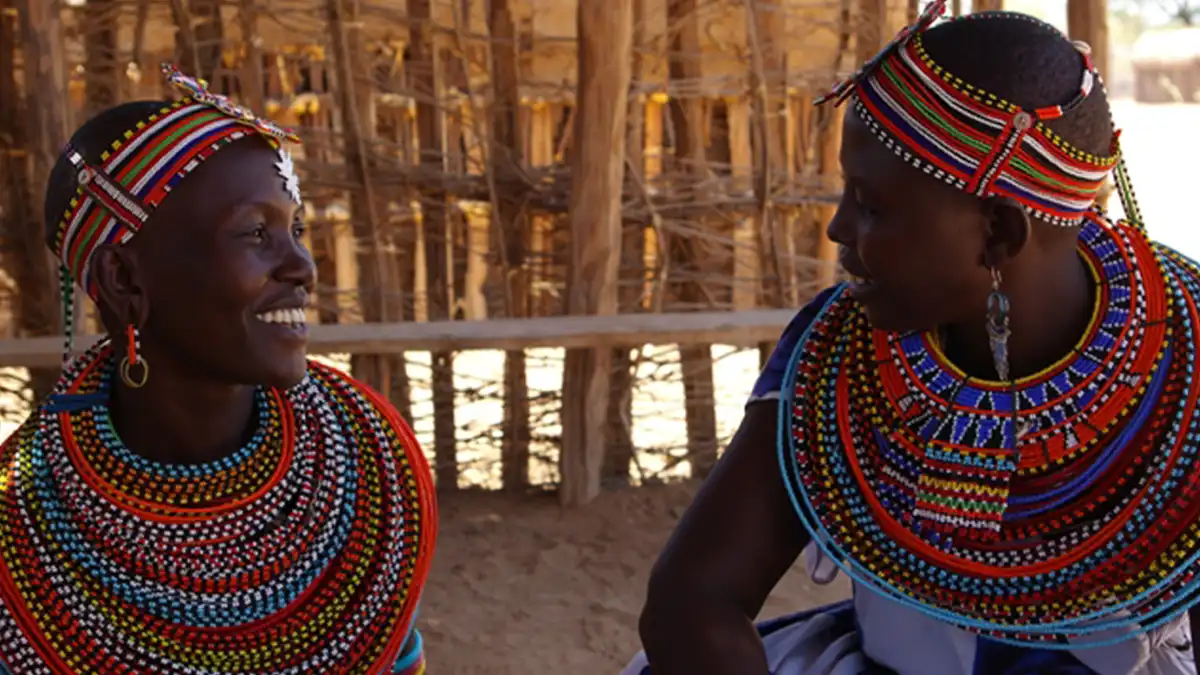
And in East Africa, women-led communities like Umoja, Samburu County in Kenya have created locally governed, collective systems of safety and economic resilience in regions long marked by insecurity and gender violence. Different cultures, different continents.
Yet, the same pattern keeps appearing. Power is shared, leaders are accountable, conflicts are mediated early and future matters more than dominance. From the standpoint of security, that’s not idealism, it’s smart risk management.
Why This Matters To You
Setting labels aside, this isn’t about culture wars or ideology. It’s about what actually produces stability. If, as an individual, you care about;
- steady jobs
- safe neighborhoods
- low chances of war and no casualties
- predictable futures for you and your families
then, you already care about effective governance. Evidence increasingly shows that societies investing in inclusion, education, social trust and women’s leadership tend to experience less violence and more resilience. That is not a political slogan, it’s measurable.
If one doesn’t want to look back just to indigenous communities, we could also consider a modern Western state, often led by women-heavy cabinets and coalitions. Finland. Its governance style emphasizes consensus, welfare, education, social trust. The results?
- High stability
- Low corruption
- Strong public safety
- Consistent rankings among the world’s most secure and livable countries.
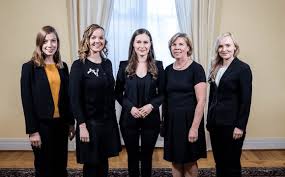
There are not exactly signs of “femininity” or “weaknesses.”
Rethinking Strength
This conversation does not intend to point out in any manner that men as leaders, are a problem. That framing would miss the main point. The real issue is deeper: for centuries, political systems rewarded aggression and dismissed care as secondary.
But care, such as planning, mediating, educating, maintaining, is what actually keeps societies functioning.
Eastern philosophy included this aspect too, originating centuries ago. Laozi for example compared true power to water; flexible, patient, and unstoppable over time. Western scholars like Carol Gilligan and Cynthia Enloe describe “ethics of care” as a form of political intelligence, not sentimentality.
Indigenous matriarchies simply prove this through lived governance. They show that you don’t need constant confrontation to stay secure. You need durable relations and accountable institutions.
So where do you fit into this?
As a reader, one may not be a part of sitting and negotiating peace treaties or sitting in parliament. But you are still affected by which values shape leadership.
When governments prioritize weapons over welfare, you feel it. When instability spreads, you feel it and when policies are short-sighted in nature, you feel it.
This means that the kind of strength we normalize today directly shapes the life we live tomorrow. And that’s why these lessons matter. They offer something refreshingly practical:
A futuristic vision of security built on foresight instead of fear, built on durability instead of domination, on who can sustain the most, not on who can threaten the most.
A Hopeful Takeaway
Indigenous matriarchal societies and modern examples like Finland, remind us of something reassuring:
In a world strife with pessimism, complexity, dominance and aggression, as members of the human species, we already know how to build stable, peaceful systems. We have done it before through the stories of the aforementioned indigenous communities (and more) and we have advanced since then to be able to replicate those foundational principles in many conflict-ridden parts of the world today.
So peace is not naïve. Nor is it an abstract concept. Nor is it only for activists. It’s a design choice.
And whether you call it feminist, or simply sensible, it might be one of the most practical blueprints we have for making the future a little safer for all of us.