
Reading time 9 minutes
Tanzanian Honey: The Forest, The Trade, and the Future of Bees
A Kenyan experienced beekeeper once told me something that completely changed how I see honey.
“Tanzania is one of the largest honey producers in Africa. Ethiopia first, Tanzania second.”
That statement came during a YouTube podcast conversation I recorded with him. He has spent more than three decades working with bees across East Africa. We began as a simple discussion about honey, and slowly unfolded into something much deeper.
The conversation started in Kenya. It drifted into colonial trade routes. It moved through climate patterns and forest systems. And eventually it settled deep inside the Miombo woodlands of southern Tanzania.
What began as a discussion about bees became a lesson about land.
This article is based on that podcast conversation and what I later witnessed myself when I visited Tanzania in December 2025.
Why Tanzania Produces So Much Honey
The answer is not modern technology.
It is geography.
Southern Tanzania is covered by a vast ecological belt known as the Miombo woodlands. A dry tropical forest system that stretches into northern Mozambique, Zambia, Malawi and beyond.
You can drive for hours under this canopy without seeing towns or highways. Just trees. Just silence. Just layered vegetation breathing in heat.
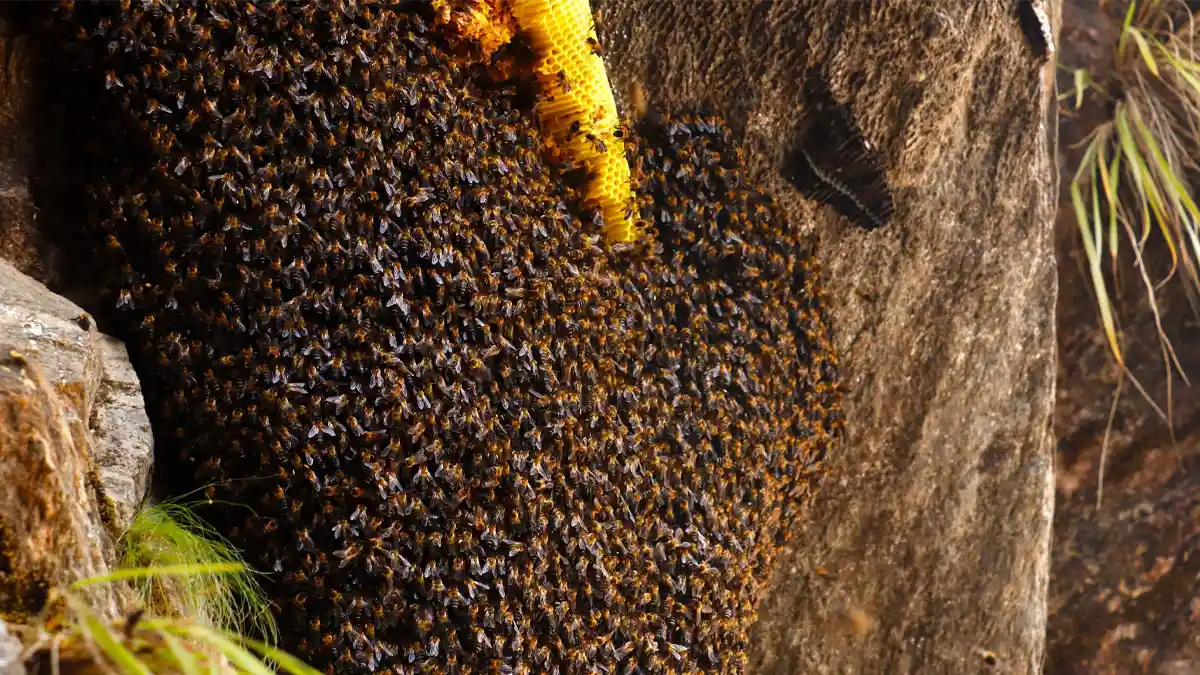
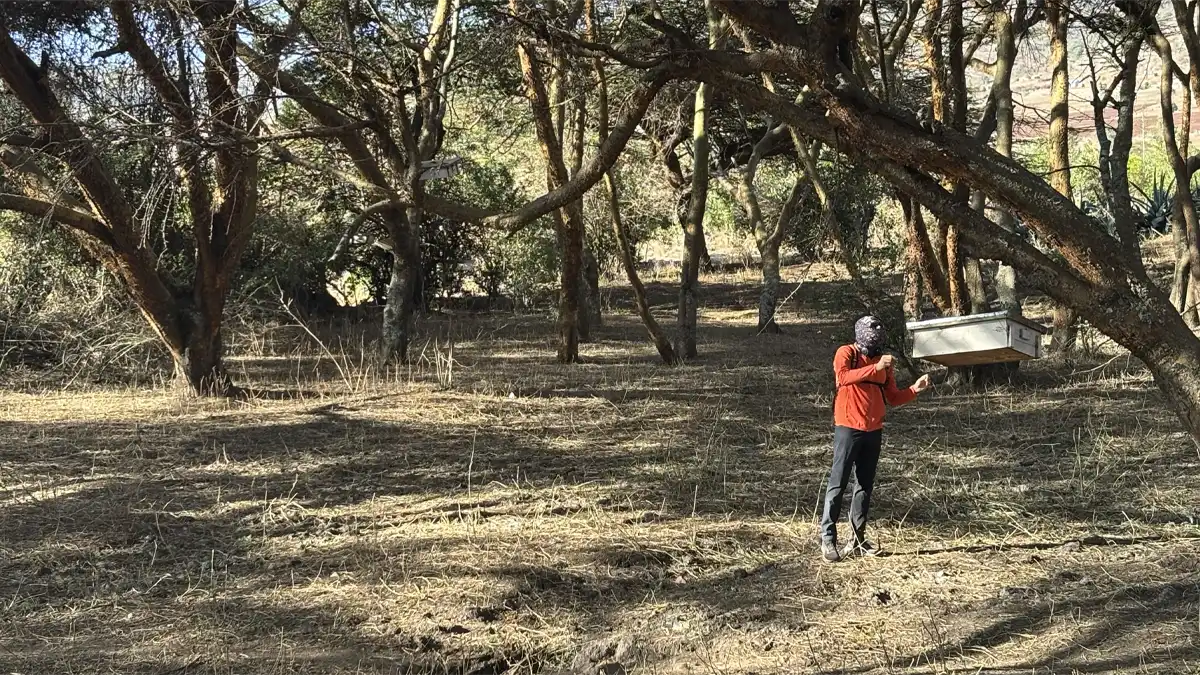
And hanging from trees across these forests are cylindrical hives made from bark.
Not Langstroth boxes.
Not industrial frames.
Tree bark rolled into hollow cylinders and suspended high in branches.
When swarming season begins, bees colonize them. When nectar flows heavily, the hives fill.
This is not commercial beekeeping.
It is honey hunting.
And it has existed here for centuries.
Why Are The Hives Hung High in Trees?
The first time I saw photographs of these bark hives hanging high above the ground, I had a simple question.
Why not keep them on stands like modern beehives?
The answer is part ecology and part survival.
In many parts of Africa there is an animal called the honey badger.
Small. Fearless. Extremely strong.
It does not come for the honey.
It comes for the brood. The developing bee larvae that are rich in protein.
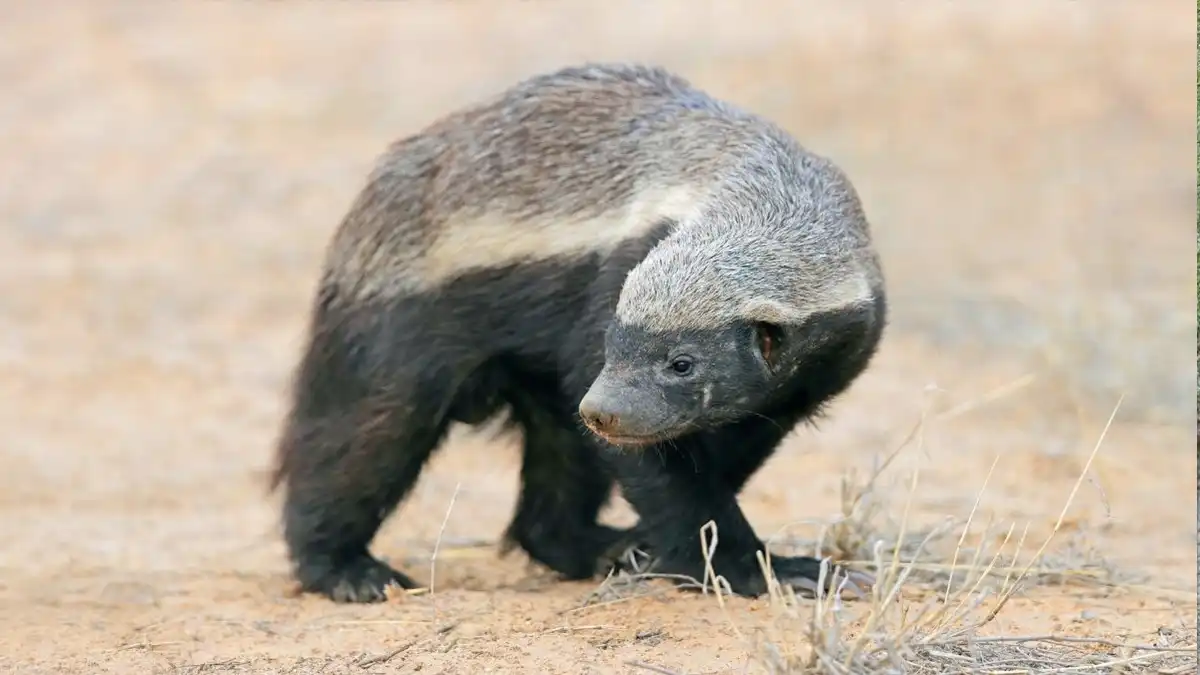
A hive placed at ground level is an easy target. A honey badger can rip it apart overnight.
So for generations communities learned to hang their hives high in trees. Sometimes twenty or thirty feet above the ground.
Protection through elevation. There is another reason.
Temperature.
Under the Miombo canopy airflow improves with height. Ground-level heat during dry seasons can become intense. Suspended hives experience better ventilation and natural cooling.
What began as protection from predators slowly evolved into climate adaptation
Even some modern beekeepers in East Africa now experiment with hanging Langstroth hives in trees. Not because of tradition, but because of ecological logic.
Sometimes tradition understands environment better than technology.
The Arab Trade That Shaped Tanzania’s Honey Economy
The most unexpected part of the conversation was historical.
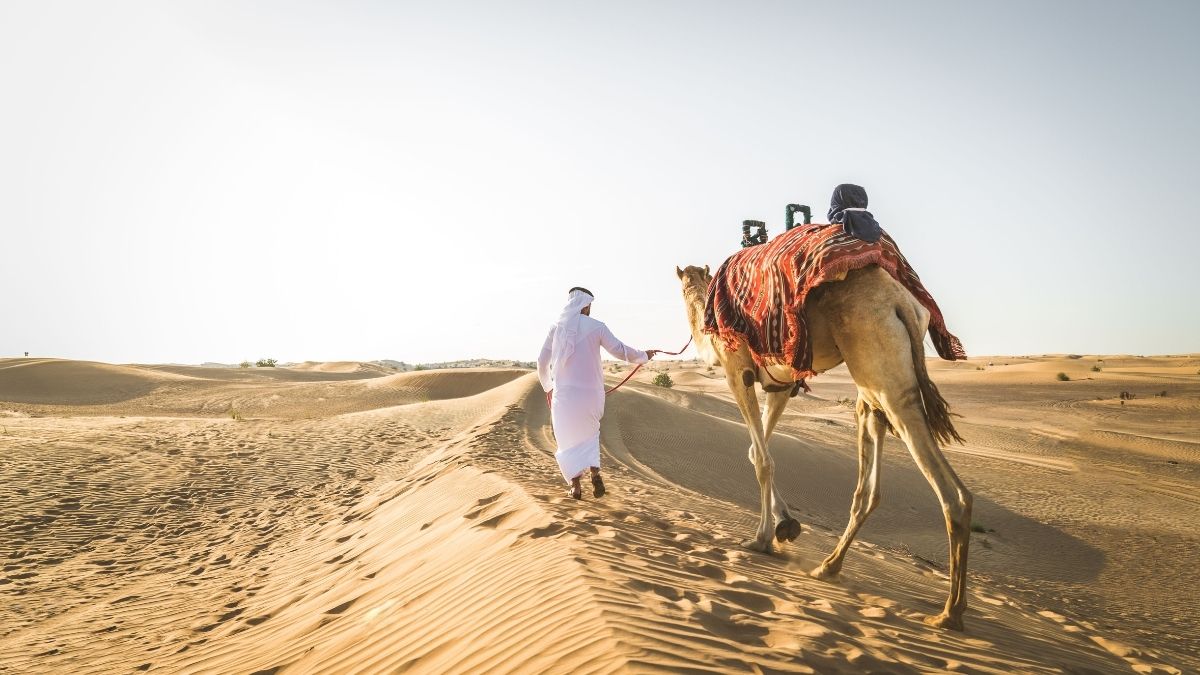
Centuries ago Arab traders moved inland from the East African coast into regions like Tabora in Tanzania. Their main trades were ivory and slaves.
But in these forests they encountered large-scale honey and beeswax production.
They began purchasing honey and transporting it back to Arabia. Over time trade networks formed. Collection points developed. Honey became part of a structured trade system.
Even today honey trading continues in those regions.
Mozambique has the same Miombo vegetation.
But without those historic trade networks it never developed the same honey economy.
Sometimes ecosystems need culture to become commerce.
Tanzania’s honey story is as much about history as it is about bees.
Honey Hunting vs Beekeeping
Much of East Africa still practices honey hunting rather than managed beekeeping.
The difference matters.
Honey Hunting
- Locate hive
- Cut comb
- Remove honey
- Often destroy brood
Beekeeping
- Manage colony
- Harvest surplus
- Preserve brood
- Sustain cycles
In parts of southern Tanzania entire combs are removed. Brood is discarded. Colonies are sometimes destroyed in the process.
Yet because the forests are vast and nectar flows are abundant, production continues.
For now.
80% of East Africa’s Honey Comes From Southern Tanzania
During the podcast he mentioned something that stayed with me.
Most of the honey consumed in East Africa originates from southern Tanzania.
Kenya, despite its organized agricultural systems, imports a large portion of its honey. Much of it comes from Tanzania.
The reason is simple.
Tanzania still has forest.
Space.
Wild forage.
Massive nectar flow from Miombo woodland species.
Honey is never just about bees.
It is about landscape scale.
What I Saw in December 2025
During my visit to Tanzania in December 2025, I was not looking for tourist attractions.
I had climbed mountains before. I had cycled across India. I had stood on summits.
This time I wanted to observe the quiet industries.
Driving through parts of the country I saw something that is becoming rare in many regions of the world.
Uninterrupted vegetation.
Large ecosystems functioning without visible fragmentation.
You understand immediately why honey production is possible at such scale.
Bees need forage diversity.
They need stable flowering cycles.
They need space that is not constantly sprayed with chemicals.
Certain regions of Tanzania still offer that.
But the balance is delicate.

40% Bees. 60% Environment.
One line from that conversation has stayed with me.
Forty percent is about the bees. Sixty percent is about the environment.
If flowers bloom but produce no nectar because of humidity shifts or rainfall irregularity, there is no honey.
If drought extends too long, colonies abscond.
If temperature rises inside hives, bees spend energy cooling instead of storing.
Honey production is an environmental equation.
Global warming is quietly altering that equation.
The Adulteration Problem
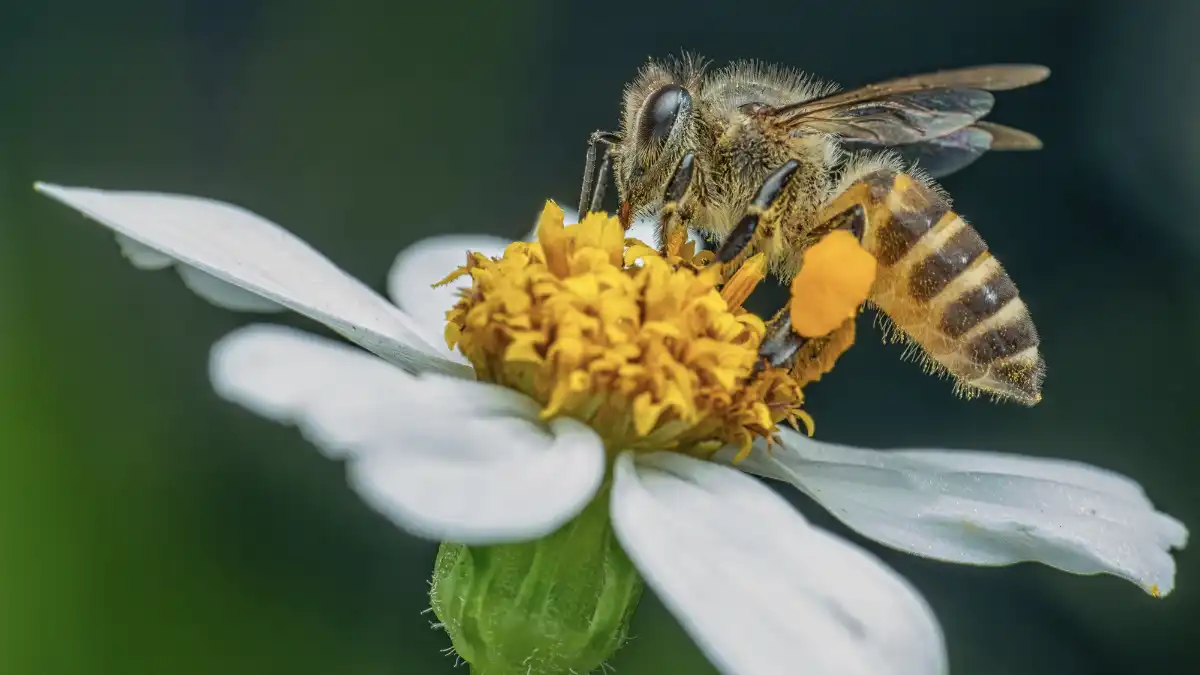
Honey is one of the most adulterated food products in the world.
When demand exceeds supply, syrup enters the system.
In East Africa rising demand and limited structured production create risk. In global markets large volumes invite manipulation.
The simplest truth remains unchanged.
If you want real honey, know the producer.
Not the label.
Not the marketing.
The source.

Is Tanzanian Honey Organic?
True organic honey requires certified pesticide-free forage zones.
Wild forest does not automatically mean certified organic.
Much of Tanzania’s honey comes from relatively undisturbed woodland. That gives it ecological advantage. But formal certification depends on structured verification.
Organic is not a feeling.
It is a process.
The Fragile Future
Young people are moving to cities.
Traditional bark hive methods are fading.
Climate patterns are shifting.
Forest cover faces pressure.
Tanzania’s honey dominance exists because of land scale and historical systems.
But long-term sustainability will depend on transitioning from honey hunting to managed beekeeping without destroying ecological balance.
That is the real challenge.
Final Reflection
When I began that podcast conversation I thought we were discussing honey.
Instead we were discussing civilization.
Trade routes.
Climate systems.
Forests.
Human behavior.
Conservation.
Honey is only the visible output.
The invisible structure beneath it is land.
And as I stood in Tanzania in December 2025, watching forests stretch without interruption, I understood something very simple.
Where forests remain large, sweetness survives.
Source
This article is based on insights from a long-form YouTube podcast conversation recorded with an East African beekeeper and field practitioner with over thirty years of experience across the region.